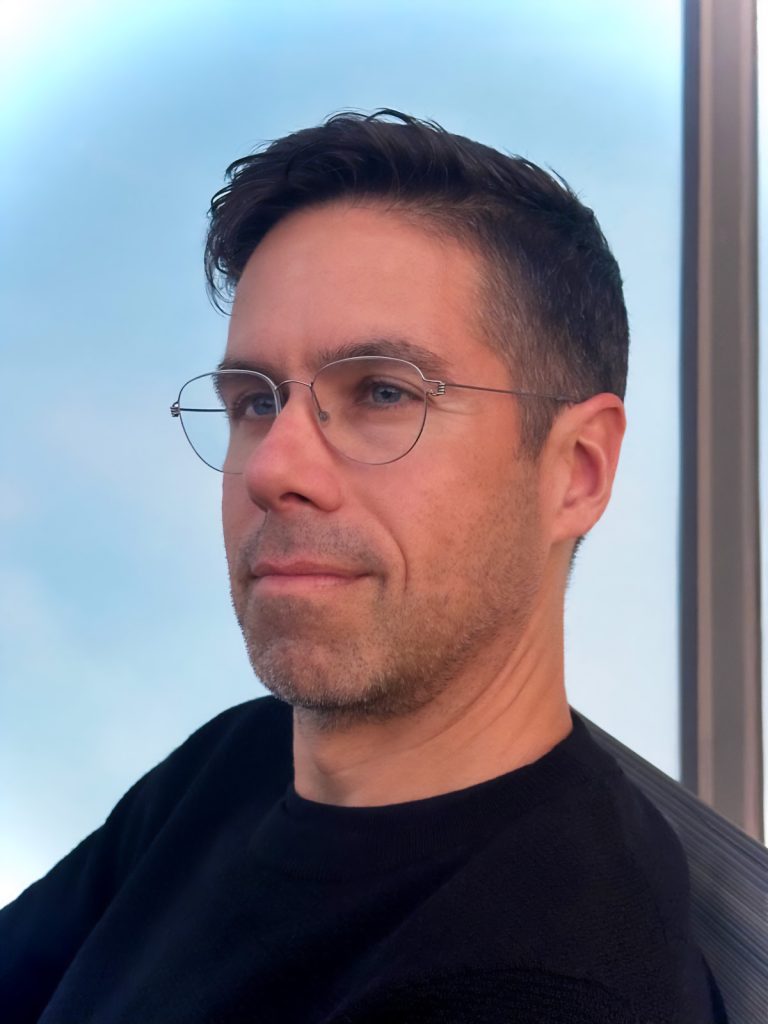
Designer Profile: Mike Carnevale
February 26, 2026
Founder and Creative Director at CARNEVALE
Education: BFA Design ‘95, Carnegie Mellon University
When did you first see design as a career possibility?
I’ve always been a “drawing while I’m thinking” type person, and in high school, that meant sketching Air Jordans, ski boots, and cars in the margins of my notebooks. As I was exploring potential majors, the words “industrial design” were instantly appealing. It was as if the words were glowing on the page of the course catalog. Mechanical engineering and architecture, the two paths I’d been seriously considering, fell by the wayside.
What has your career path been?
Carnegie Mellon’s design program had a general curriculum for the first two years before we specialized in industrial design or graphic design. That made a big difference, because I learned fundamentals in both 2D and 3D design that I carried forward into the digital space, which hadn’t yet emerged as its own discipline.
Looking for a summer internship, I wrote letters to every design agency and department in Grand Rapids. I finally landed at Duncan Design, a small industrial design agency that did a lot of work with Steelcase. That huge break was my first real introduction to the professional world, and the internship led directly to my first full-time job after school.
I’ve had more lucky breaks than I might deserve, and the early ones made the biggest impacts. Craig Vogel was an especially influential professor who connected me with Jim Ryan, a partner at Henry Dreyfuss Associates in New York City and president of IDSA at the time. That connection turned into a job at the legendary design firm, where I worked on projects way above my pay grade.
Was opening your own business always part of your plan or did your plan evolve? Did the business parts attract you as much as the design work?
I was freelancing for several years before I even realized I was in “business.” It just felt like a lifestyle that blended creativity, travel, learning, and independence. That began to change as I started hiring designers to help with the work. But as I spent more time working on the business than on design tasks, I initially felt a sense of loss, as if I were leaving my creative self behind. But reframing my role as a “business designer” changed that. Now I get to design the conditions in which our team is able to do our best work and that enables our clients to be successful.
Your career has paralleled the development of technology. How did your design sensibility affect the way you see opportunities in technology? How do you see technology changing the field of design? What do designers of the future need to be prepared for?
All design careers are intertwined with technology, but the difference is how we relate to that constant progression. CARNEVALE intentionally works at the intersection of emerging technology and consumer experience, which is a constantly evolving space that’s exciting to create in and challenging to keep up with.
Each wave of transformational technology—desktop publishing, the internet, and now AI—has expanded the creative territory for design. These waves change how users engage with digital experiences and require designers to imagine how these emerging technologies can be useful, usable, and desirable. Design is the human interface to technology, and as technology has changed, so has design.
Holding on to past design tools and processes is the same as holding on to past technologies, and that’s never worked out well. Design is one of the most optimistic vocations: there’s always a better solution to find. That optimism is essential, especially now, as we embrace constant change and the creative potential it brings.
I write about this relationship between design, technology, and culture in my Substack: thewavefront.substack.com
How do you think AI will impact designers? Brand? Culture?
How do I think “the internet” will impact designers? Or “personal computers”? It’s a sea change, and an exciting one bursting with creative opportunity. Most narratives fixate on what work AI will replace. We focus on what work will be created, specifically how the world of digital experiences will be remade, across the board, to integrate AI-powered features. Every product needs to be re-imagined, designed, and produced. Designers are ideally positioned to facilitate those conversations, help teams envision the future, and bring these products to life.
How do you approach problem solving as a designer?
Design is the most effective discipline for building consensus during the product creation process. A good design outcome delivers value to everyone, not just end users, but also stakeholders like business, marketing, engineering, IT, and customer support. Designers do this through our ability to imagine solutions that address multiple challenges at once, and our superpower to visually express those concepts. When we show these ideas to project team members, we’re building a shared mental model of the future. It’s not an oversimplification to say that we make pictures and prototypes that people can react to, then make new ones, with slightly higher fidelity, that respond to those reactions. And repeat until you’re done.
What do you see as the intersection between engineering and design?
Design and engineering have been codependent yet rival siblings since the beginning, always driving each other forward. They solve different parts of the same problem: how to make the best product within specific constraints. Design challenges engineers to think differently, and engineers challenge designers to do the same. The tension between the two disciplines is what has fueled the greatest innovative advancements and will continue to do so.
Who has inspired, guided, or mentored you? How can young designers find mentors today?
I’ve had so many mentors, friends, and guides along the way, even now, that I couldn’t name them all. At every step of my career, I’m indebted to people who have helped me prepare for what’s around the corner, foresee potential paths I might take, and better navigate the inevitable predicaments.
The irony of the current era is that while it’s never been easier to reach out to someone you admire, it’s somehow less common than ever to establish these relationships. The approach hasn’t changed: be yourself, be kind, and be open. Find someone you respect and let them know who you are and how you think they can help you. Who knows? They may need your help too.
What do you find satisfying about the work you do?
Agency work has let me meet incredible people and work with diverse brands across a wide range of markets and geographies. Every project is an invention—a new combination of people, business challenges, technology components, and creative opportunities. It’s constantly exciting, invigorating, and really, really hard!
What do you like best about your current role? What percentage of your time do you spend doing that thing?
I look at my role as a generator of success for two sets of clients: our employees and our customers. When I can find alignment between where our customers want to go and how our employees want to grow, tremendous things happen. I love that part of my role and spend the majority of my time in conversations, both inside and outside CARNEVALE, finding those opportunities for alignment that fuels our work.
A lot has changed since you entered the field. What advice do you have to a young professional just starting out in the field?
A young professional’s real power is bringing boundless imagination, creative energy, and effective communication to their first job. Those traits are what employers are looking for because they enhance teams and better position companies to succeed. These characteristics also lay the foundation for leadership, strategy, and the vision to navigate in this extraordinary digital era.
Learn the tools, especially emerging ones that haven’t been fully adopted yet. Stay curious. Read widely, try new tools before you need them, and put your work out there even when it feels unfinished—because no design ever truly is.
What is the one thing that a designer needs to be successful?
Optimism. A belief that there is always a better way, and the confidence to pursue it.
How do you think future designers might be made aware of the design field sooner? Young people are surrounded by more design than ever, yet most don’t realize it’s a career path. We launched a nonprofit called Tech Collaborative (tech-collaborative.org), which trains underrepresented young people in technology to build websites for nonprofits who need them. Part of our model is increasing awareness of design and development career pathways by hosting workshops where participants evaluate apps they use every day (e.g., YouTube, TikTok) and play the role of designer. Tech Collaborative is always seeking mentors interested in sharing their experience to help grow our field. Find me on LinkedIn if you’d like to get involved.