

Designer Profile: Anne Redford
August 15, 2025
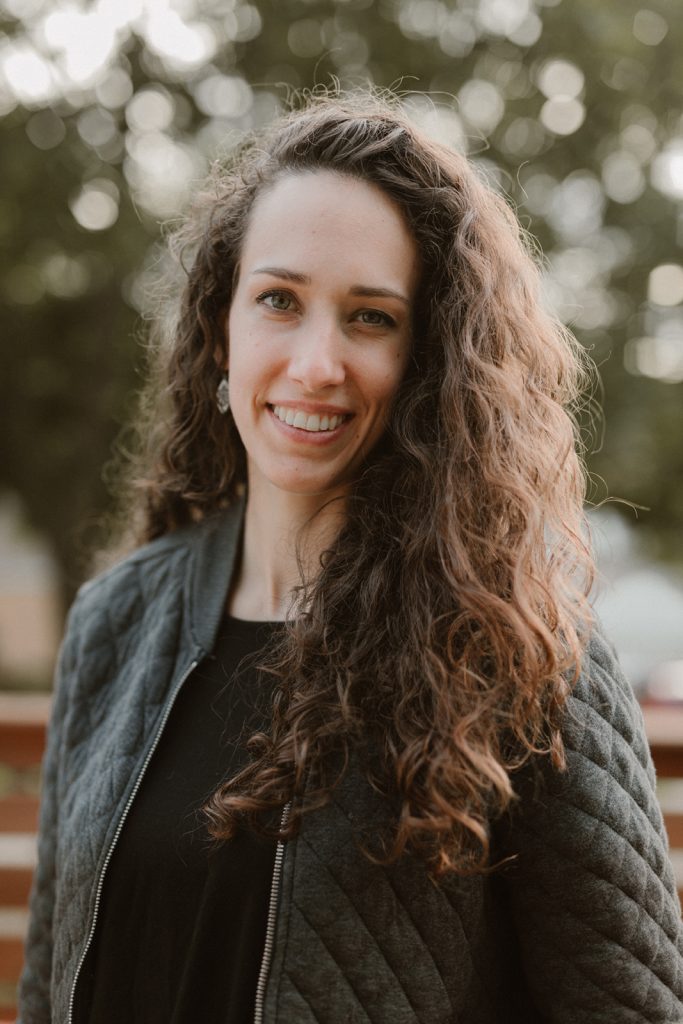
Senior Manager, Global Field Creative Strategy
MillerKnoll, Inc.
Education: Ferris State University (Graphic design and MBA)
Did you always know you wanted to pursue Graphic Design?
For most of high school, I had planned on being a physical therapist. It was in the math and science track, and I was excited by its proximity to sports and fitness. But by the end of high school, I didn’t want to do more biology or chemistry.
The class that changed things was this rudimentary Photoshop, coding, digital media course. It was the most fun I’d had in a class environment in a long time. Design seemed riskier than a career in sciences, but it just felt right. I had always had an interest in Art, and design felt like a natural way to channel it. When I considered graphic design vs. STEM, my mom made me google average salaries and the results were just convincing enough to open the door to pursuing a design career.
So, with a baseline knowledge of Photoshop and HTML, I decided to pursue a design career. I went into it pretty blind. Typography, color theory, and the principles of graphic design were all brand new. But the scientific method and mathematical reasoning found their way into my approach, making the technicality of design and composition a natural extension of my line of thinking.
When did you first see graphic design as a career possibility?
I didn’t understand what Graphic Design was until I was already in classes in college. I had a sense of activities to be done, but the possibilities became a lot clearer once I began to study design. I knew what I was seeking wasn’t exactly art and wasn’t exactly marketing. Graphic Design was a creative outlet that also seemed to rely on strategic thinking and technical skills.
What is the one thing that a graphic designer needs to be successful?
Curiosity. I think to solve problems, you need to want to know why? Who? What if we did it this way? How can we do this better? Is it clear?
What has your career path been?
I started my career as a graphic designer at Herman Miller as part of their in-house creative team. I focused mostly on information graphics and presentation design.
As I got more experience, I started to art direct photography, illustration, and video for product launches (planning for image use-cases, composition, and accessory styling and storyboarding videos).
Then I began overseeing all presentation and corporate communications design work.
My promotion to mom a couple of years later inspired me to start my own freelance business, leaving plenty of room in my schedule to spend time with my son.
But a year into that I got an offer I couldn’t refuse–the opportunity to join a team as the lead of Creative Strategy, a new function that would support the organization through design and process improvement initiatives.
This role has been like the orthopedic insert for my design career shoe. It fits just right.
A degree in graphic design is just the beginning. There are infinite paths to choose from. I’ve paid attention to what I’m good at, what I like to do (not always the same), and who I like to work with—and I just continue to follow that gut feeling.
Who has inspired, guided, or mentored you?
My professors at Ferris State gave me confidence to jump into my career. They taught the hard and soft skills needed to thrive in the “real world.”
Professionally, Mindy Koschmann, a long-time editorial partner, taught me how closely editorial and design could and should work together to make content clear and impactful. The great Steve Frykholm mentored me while designing a picnic poster—reminding me that it’s okay to take your time finding inspiration and purpose.
My current manager, Erin Gravelyn, has been helping me channel my unique skills into growth and impact. She makes work a joy.

What do you find satisfying about the work you do?
Most of the design work I do now is more process and experience oriented. This means that I’m always making improvements—building tools and templates that make work easier, building platforms to make tools better and more accessible. I love that our work is so focused on human experience.
What do you know about the profession now that you wish you’d known when you were first starting out?
I wish I had known how vast the options are. Once you establish a core set of skills through a degree or experience, you can choose your own adventure in design.
Being so malleable early in your career leaves great opportunity for growth and transformation, but that also means you might inadvertently set a long-term trajectory.
I’m happy where I ended up, but I think I would have done more to actively manage my career before now.
How do you think future designers might be made aware of the graphic design field sooner? What could be done to reach them?
Introducing design thinking into high school course work. From what I recall, there weren’t many options that fell between Trigonometry and Ceramics.
Design thinking helps us outline a problem and seek solutions. It helps us organize our thoughts. It helps us present our ideas in impactful ways. These are skills that apply to any course or job.